
Apple is rejecting vibe-coded apps. The signal is bigger than the App Store.
Key takeaways
The rules didn't change, the submissions did
Apple is citing the same review guidelines (4.2.1, 4.3, 5.2) it has used for years. What's new is the volume of submissions failing them, and where the failures cluster.
Vibe-coding is excellent at the first 80%
It scaffolds polished UIs in minutes. It doesn't handle the boring last 20% (error states, offline behavior, edge cases), which is exactly what App Review opens an app to look for.
Platform risk just got more expensive
When the bar to ship something drops, the bar at the gatekeeper rises to compensate. Relying on a single distribution channel costs more than it did a year ago.
The fix is engineering, not less AI
Be specific about what the product does. Build the parts the model won't volunteer. Read the guidelines before submission. None of this requires giving up vibe-coding tools, just remembering they're tools, not finished products.
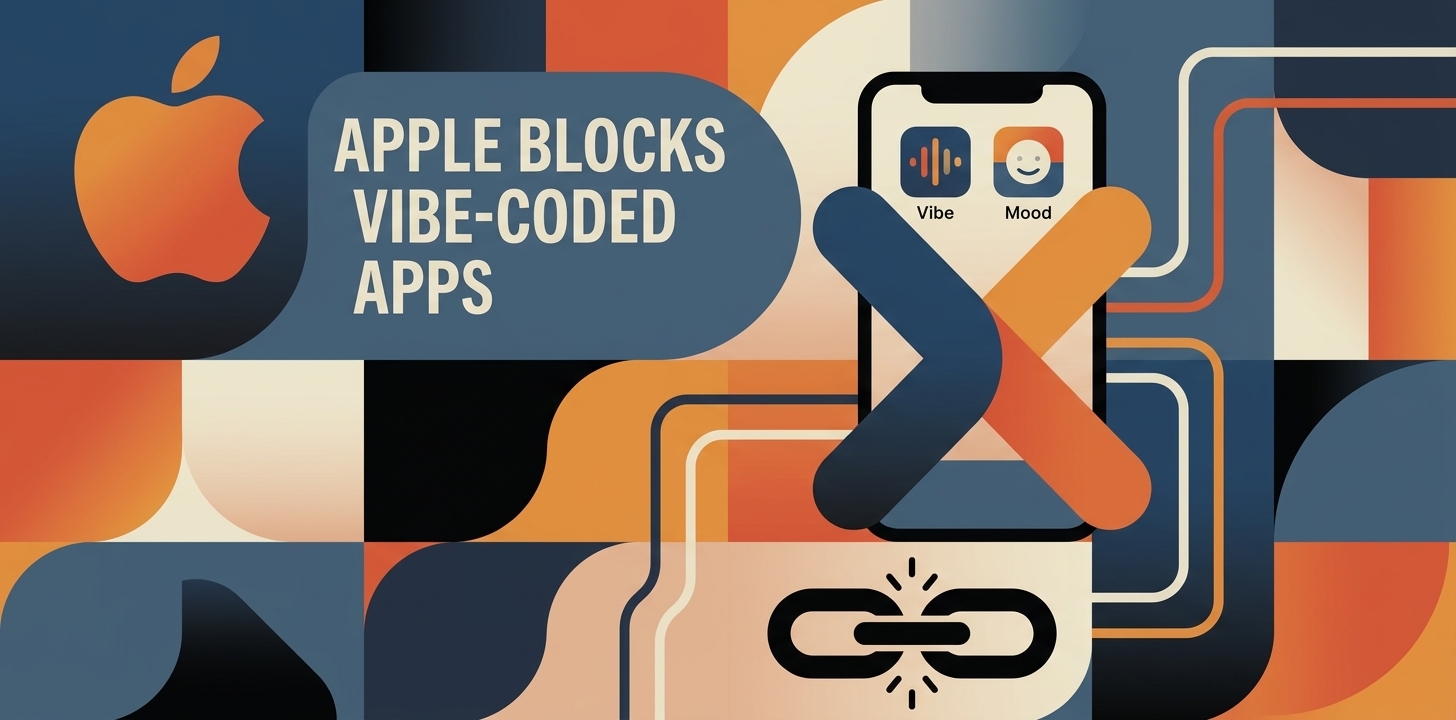
Apple has quietly started rejecting and removing a specific category of submissions from the App Store: apps built with vibe-coding tools. These are services where you generate a working product from a few text prompts, no real code involved. The Financial Times reported the pattern this week, and the trend matters more than any individual rejection.
The framing isn't anti-AI. Apple is citing the same review guidelines it has used for years: minimum quality, real functionality, no misleading users about what the app actually does. What changed is the volume of submissions failing those checks, and where they're coming from.
The App Store isn't the most interesting part of the story. The interesting part is what it tells you about shipping a product that was generated rather than engineered, on any platform with a reviewer at the door.
What App Review is actually doing
The rejections cluster around a handful of guideline numbers any regular submitter knows by heart. 4.2.1 covers apps that aren't functional or are essentially duplicates. 4.3 covers spam, including apps that copy a popular product with minor variations. 5.2 covers misleading users about what the software does. None of those rules are new. The volume of submissions tripping them is.
Apple hasn't published numbers. From what the FT pieced together, App Review is seeing waves of submissions that visibly fail the same checks in the same ways: UIs that look polished in screenshots and fall apart on first launch, 'AI' features that are one model call wrapped in a UI, listings that copy a popular app's name and icon with the product half-implemented. The reviewers don't have to look hard.
Why vibe-coded apps fail this review
Vibe-coding is excellent at the first eighty percent of a product. Login screen, list view, settings page, onboarding flow. The model has seen thousands of those, and it will scaffold one in minutes. Where it falls apart is the last twenty percent: the work nobody wants to spec out and the model has no reason to volunteer.
That last twenty percent is what a reviewer notices first. The keyboard covering the input field. The network call that hangs without a timeout. The empty state that ships with placeholder text. The permission the app requests but doesn't actually need, because the model copied it from a template that did.
A few patterns the rejections keep falling into:
- Thin wrappers around an LLM with no functionality of their own: the AI call is the product, and there isn't much else around it.
- Visual clones of popular apps where the underlying logic is half-finished or missing entirely.
- 'AI X' listings (AI photo editor, AI calendar, AI todo) where the AI part is one API call and the rest is broken.
- Cargo-culted permissions, entitlements, and SDK includes the developer doesn't actually need, because the model put them in by template.
None of these are new failure modes. App Review has caught the same things for fifteen years. What's new is how cheap they are to produce, which means a lot more of them show up at once, which means review gets stricter to compensate. The bar moves up because the floor came down.
The lesson is platform risk
Apple is the loud example because Apple controls the only meaningful distribution channel for iPhone software. The same dynamic exists everywhere there's a gatekeeper: Play Store, Chrome Web Store, GPT Store, Shopify's app marketplace, anywhere a product needs someone else's permission to reach users. Rules don't change often. When they do, they change for everyone in your category at once.
For anyone shipping AI-assisted software, the practical implication isn't to stop using these tools. It's to remember that 'I built this in a weekend' and 'this is a product that survives a review process' are two different claims, and to plan for the second one from the start.
In practice that means being specific about what the product does for the user. 'AI-powered' is a marketing word, not a value proposition. It means investing in the parts vibe-coding tools are weakest at, which are also the parts reviewers care most about. It means reading the relevant guidelines before submission, not after the rejection email shows up. And it means not betting the whole business on a single distribution channel, because eventually that channel will shift the rules.
AI-assisted development isn't slowing down. The bar to ship something is going to keep dropping. The bar to ship something that survives a review process (and a real user) is going the other way. Both can be true at once. That's the gap worth designing around.
Frequently asked questions
Is Apple banning AI-generated apps?
No. App Review is rejecting apps that fail existing quality and functionality rules, not apps that were partly written by AI. The cited guidelines (notably 4.2.1 on functional substance, 4.3 on spam and duplicates) predate the current wave of AI coding tools by years. The pattern is that vibe-coded submissions fail these checks more often than human-coded ones.
Which App Store guidelines are most often cited in these rejections?
From what the Financial Times reported, three show up most: 4.2.1 (apps that are not functional or are essentially duplicates of existing apps), 4.3 (spam, including apps that copy other apps with minor variations), and 5.2 (misleading users about what the app does). These are the same numbers most regular submitters know by heart.
Does this mean I should stop using AI coding tools?
No. It means the gap between 'a prototype that runs on my laptop' and 'a product that survives App Review' matters more than it used to. Vibe-coding tools are excellent at scaffolding. They're weakest exactly where reviewers look first: error handling, edge cases, what happens when something fails. Engineering time on those parts is the difference.
How do I reduce platform risk?
Don't make a single distribution channel the whole business. A secondary channel (a web version, a direct download, an alternative store) is real insurance. Beyond that: read the relevant guidelines before you submit, write down in plain language what the product actually does for the user, and make sure the boring parts (failures, offline behavior, error states) are actually finished.
Related posts
Android developer verification starts September 30
Google now requires every app on certified Android devices to be registered to a verified developer. The app is registered to whoever holds its developer account and signing key, so check both before the 2027 global rollout.
Shopify is retiring script tags: apps lose them October 1, storefronts March 1
Shopify is deprecating storefront script tags. Apps lose access on October 1, 2026, and visible storefront features break on March 1, 2027.